155. Model T

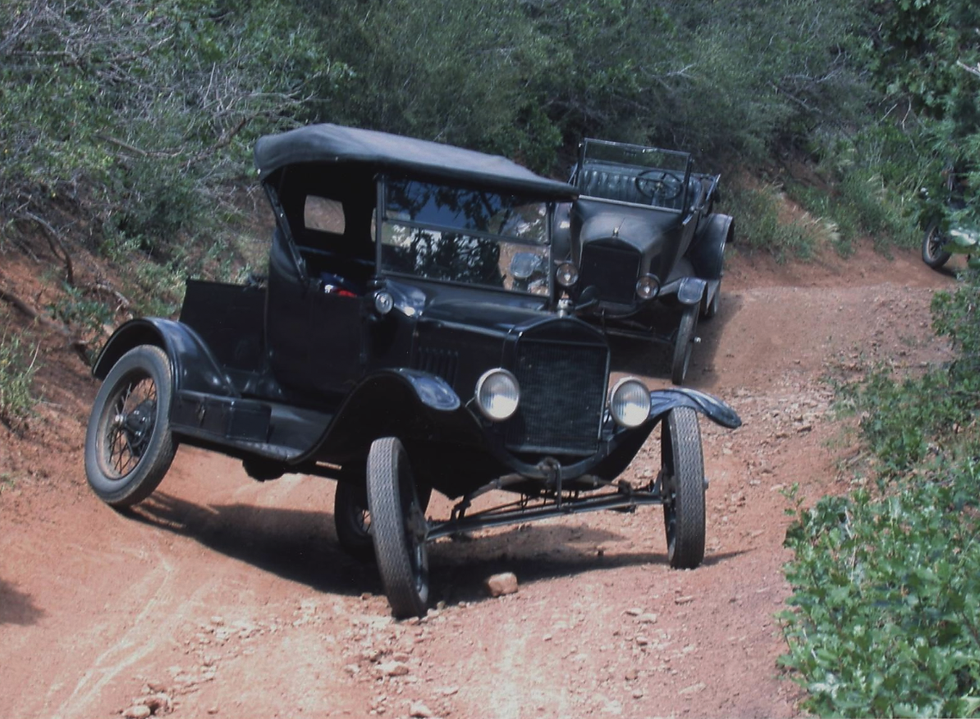
When automobiles were invented, a majority of Americans lived in rural places. Most of those people had never been more than five miles from home. In the first decade of the 20th century, the idea of such people owning a car was laughable—cars were an expensive, unreliable luxury, ill-suited to country roads. Until the Model T.
It was cheap, rugged, and adaptable—but mostly it was cheap. Henry Ford developed the moving assembly line in relentless pursuit of lower costs. For the nearly 20 years that Model Ts were manufactured, Ford and his engineers made the car stronger, lighter, and cheaper to assemble. He passed those savings on to customers. From 1909 to 1925, the cost of the Model T dropped from $825 to $260 (roughly $30,000 to $5,000 in 2026 dollars).
“It will be so low in price that no man making a good salary will be unable to own one – and enjoy with his family the blessing of hours of pleasure in God's great open spaces,” Ford said.
By the early 1920s, half of the cars in America were Model Ts. But in 1927, Chevrolet outsold Ford. GM offered payment plans and vehicles with more comfort and options, while Ford stuck with the one-size-fits-all Model T.
Ford applied his talent for spreading ideas to more than automobiles. His newspaper published antisemitic tracts like “How Jews Degraded Baseball.” Sued for libel, he settled and published an apology. Still, Hitler awarded him a medal in 1938, which Ford accepted.


Links:
This post is part of The American 250, a series featuring 250 objects made by Americans, located in America, in honor of the country's 250th anniversary. 250 words on 250 works, from January 1 to December 31, 2026.
Too many emails? To receive a weekly recap instead, please subscribe on my Substack blog. Instructions for turning on the weekly summary can be found here.
Have something you’d like me to consider for inclusion? Please feel free to leave a comment!