216. Hula Hoop
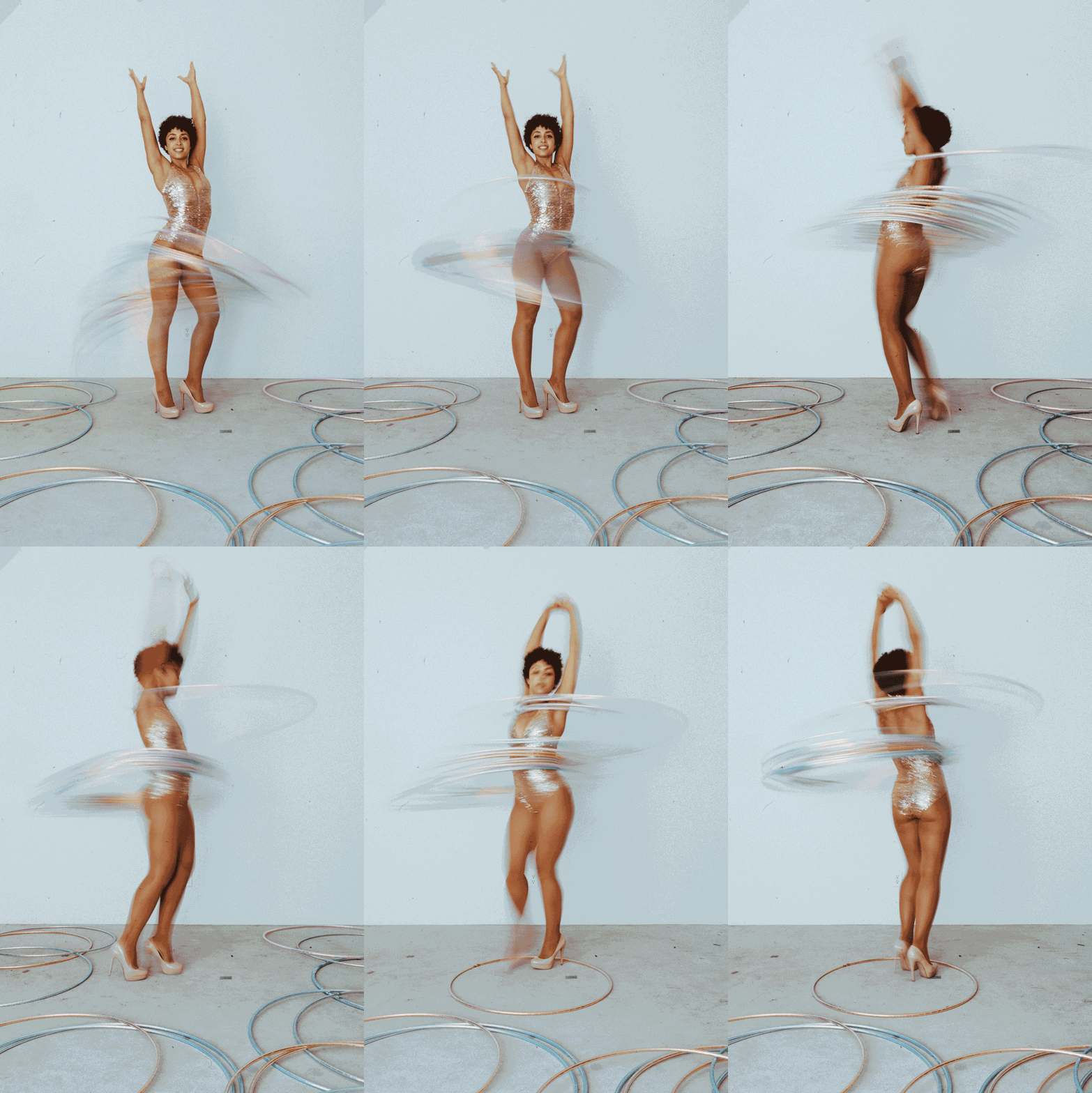
It was one of the first triumphs of guerrilla marketing. In early 1958, Wham-O went straight to kids on Southern California playgrounds, demonstrating its Hula Hoop and giving away free hoops to children who could keep one spinning. Founders shot commercials themselves using 16mm film in their backyards.
By summer, toy distributors and retailers were ordering hoops by the thousands. There were five competing hoop songs on the radio. In August, storekeepers told Sports Illustrated that hoops were outselling Marilyn Monroe calendars. But Wham-O had no patent, and by September, the market was flooded with copycats. By year end, Wham-O was left with millions of surplus hoops.
In 1960, Wham-O was sued by Joan Anderson and her husband Wayne. Joan had brought the idea—and the name—to Wham-O from Australia, where bamboo hoops were a national craze. She claimed they had a handshake deal, that Wham-O co-founder Spud Melin told them they’d receive a penny for every hoop sold: “He said, ‘If it makes money for us, it’s going to make money for you.’” But Wham-O stopped returning calls, and the company successfully argued that it had lost money on Hula Hoops. The Andersons received a settlement of $6,000.
Joan Anderson died in 2025 at 101. In the documentary Hula Girl, she said, “The world isn’t fair, but life goes on. I had a great life. My husband lived to be 87 and we had 63 wonderful years together. Happiness is definitely the best revenge.”


Special thanks to Julie Webb and Jodie Thorne for suggesting the hula hoop.
Links:
Wham-O and Petroleum Product Hoopla – American Oil and Gas Historical Society
Marketing Marlex®: From Hula Hoops to Plastic Tubing – American Chemical Society
Defying gravity: insights into hula hoop levitation – Tami Freeman, PhysicsWorld, January 3, 2025
Joan Anderson, who twirled her way into hula hoop history, dies at 101 – The Washington Post, August 1, 2025 (unlocked paywall)
Richard Knerr, 82, Craze Creator, Dies - The New York Times, January 18, 2008 (unlocked paywall)
This post is part of The American 250, a series featuring 250 objects made by Americans, located in America, in honor of the country's 250th anniversary. 250 words on 250 works, from January 1 to December 31, 2026.
Too many emails? To receive a weekly recap instead, please subscribe on my Substack blog. Instructions for turning on the weekly summary can be found here.


