80. Miss America Crown
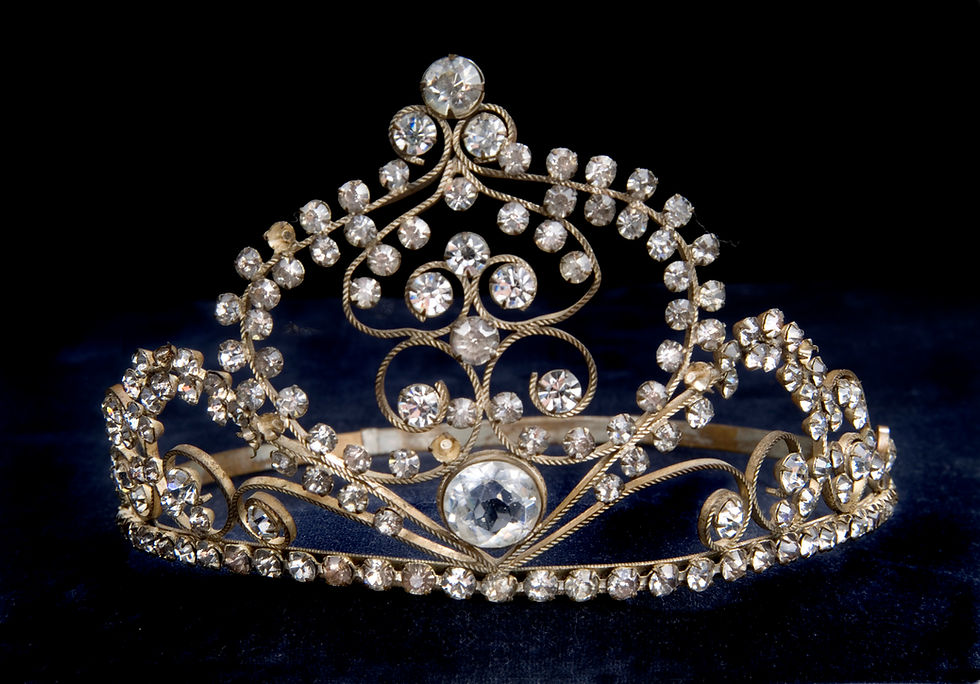
The Miss America pageant launched in 1921, one year after American women got the vote. The suffragists themselves had used pageantry and sashes (emblazoned with “Votes for Women!”) to normalize women as civic participants. Miss America preserved the sashes, but stripped them of demands for equality, put participants in swimsuits, and crowned the winner with rhinestones.
This delicate 1951 tiara, now in the Smithsonian Institution, looks nothing like the four-pointed crown that’s become the pageant's logo. It was placed on the head of Yolande Betbeze, a 23-year-old opera singer from Mobile, Alabama, of French Basque descent. Dark-haired, dark-eyed, and by no means the pageant's expected type, she beat forty fair-haired state champions by unanimous vote.
But Betbeze refused to parade in a bathing suit for pageant sponsor Catalina. She aligned herself with civil rights causes and criticized the pageant's racial exclusivity from inside the institution. She was a problem.
She would not be the last. In 1993, Leanza Cornett, whose platform was AIDS awareness, refused to wear the crown during public appearances. "How do you talk about practicing safe sex with this thing on top of your head?" she asked. Traditionalists threatened to boo her off the stage.
It’s a recurring pattern: the crown attempts to dictate meaning, and the woman wearing it decides whether to play along. Recently the pageant has struggled—in 2018, it abolished the swimsuit competition, and has faced leadership crises, declining viewership, and financial instability. American culture shifts, and Miss America struggles to keep pace.
Links:
Yolande Betbeze - Encyclopedia of Alabama
How the Swimsuit Showdown Shaped the Miss America Contest – Amy Argetsinger, Smithsonian Magazine, December 13, 2021
Miss USA vs. Miss America: How to tell the difference between the two biggest pageants – Anneta Konstantinides, Business Insider, updated September 5, 2025
This post is part of The American 250, a series featuring 250 objects made by Americans, located in America, in honor of the country's 250th anniversary. 250 words on 250 works, from January 1 to December 31, 2026.
Too many emails? To receive a weekly recap instead, please subscribe on my Substack blog. Instructions for turning on the weekly summary can be found here.
Have something you’d like me to consider for inclusion? Please feel free to leave a comment!
[1] From Hickey's book Invisible Dragon: Four Essays on Beauty (1993): https://www.goodreads.com/quotes/872030-beauty-is-and-always-will-be-blue-skies-and-open


