94. Mount St. Helens Ash Jar
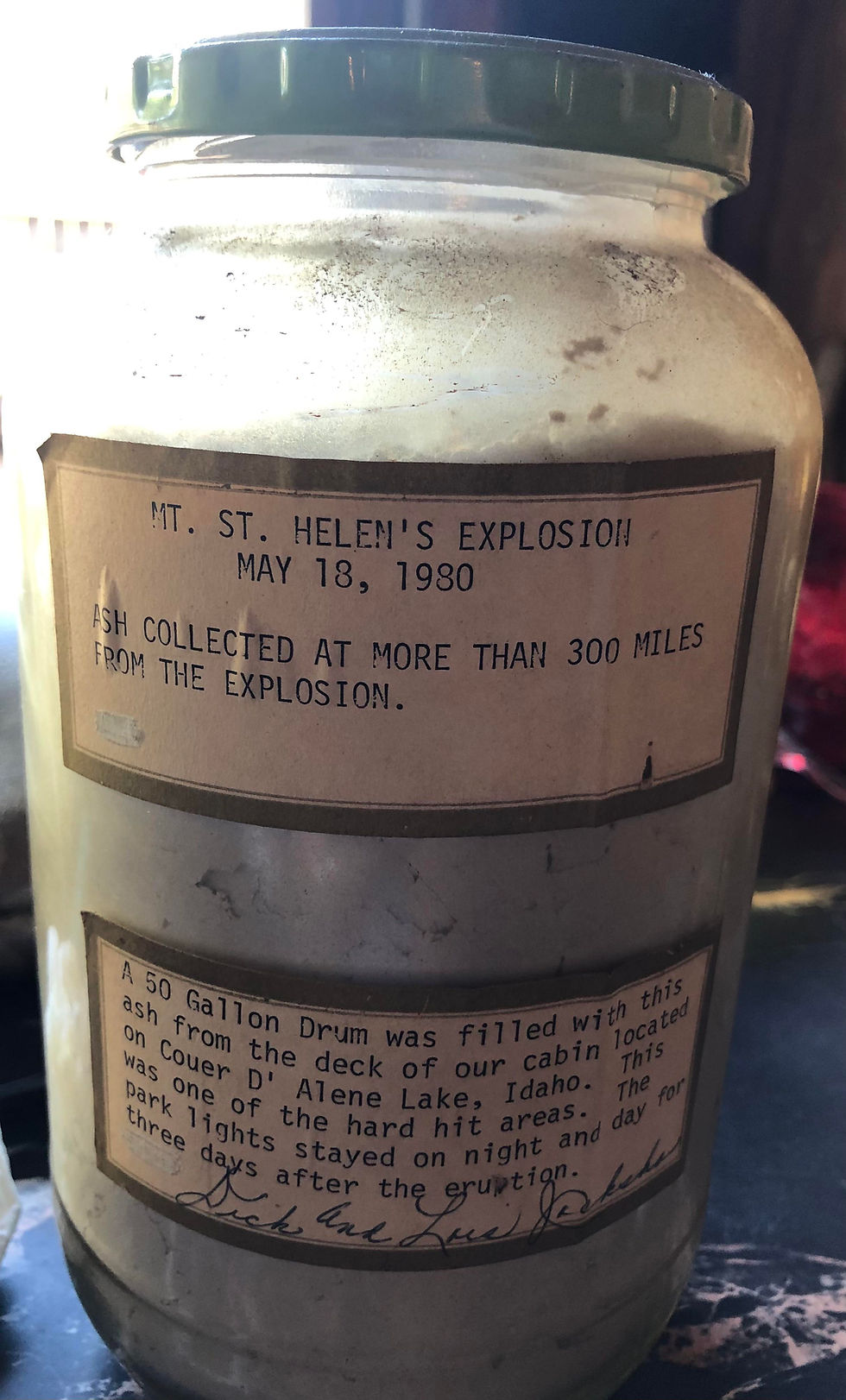
People knew something was coming. The mountain had been dormant since the 1850s, but in March 1980, small earthquakes—an “earthquake swarm”—began to signal its awakening from hibernation. Washington Governor Dixy Lee Ray declared a state of emergency, creating a “red zone” around the volcano.
But the politics of the red zone were fraught. Weyerhaeuser was logging nearby and lobbied hard to maintain access. Owners of nearby cabins fought to visit their properties. Scientists knew an eruption was likely, but they couldn't predict that the mountain would explode sideways.
The danger zone proved far too small. On the morning of May 18, 1980, the north face of Mount St. Helens collapsed in the largest landslide in recorded history, uncorking a lateral blast that released 24 megatons of thermal energy, the equivalent of 1,600 Hiroshima bombs. The explosion snapped trees 10 feet in diameter like matchsticks. It killed 57 people, most of whom were outside the red zone.
Harry R. Truman, the best-known holdout on Spirit Lake, refused to leave his lodge. When the mountain erupted, the lake surged in a 600-foot tsunami, burying the surrounding area beneath avalanche debris. Neither Truman nor his lodge was ever found.
Surveying the damage, President Carter said, “Someone said this area looked like a moonscape, but the moon looks like a golf course compared to what's up there.” 46 years later, the blast zone is a patchwork of new habitats—thriving frogs, lupines, and pocket gophers where old-growth forest once stood.
Links:
How a Team of Gophers Restored Mount St. Helens With Less Than a Day of Digging - Alexa Robles-Gil, Smithsonian Magazine, November 14, 2024
Mistakes Led to Needless Deaths From Worst Volcanic Blast - Simon Worrall, National Geographic, March 20, 2016
Robert Landsburg, The Photographer Who Spent His Final Moments Documenting The Eruption Of Mount St. Helens - Genevieve Carlton, All That’s Interesting, March 7, 2024
This post is part of The American 250, a series featuring 250 objects made by Americans, located in America, in honor of the country's 250th anniversary. 250 words on 250 works, from January 1 to December 31, 2026.
Too many emails? To receive a weekly recap instead, please subscribe on my Substack blog. Instructions for turning on the weekly summary can be found here.
Have something you’d like me to consider for inclusion? Please feel free to leave a comment!


